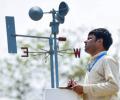
'This system will be of immense help in agricultural planning, disaster management and water resources management.'

Air India has deferred annual salary increments for its staff by at least one quarter and urged a "relentless focus on costs" due to external headwinds like the closure of Pakistan airspace, West Asia conflict, rupee depreciation, and a significant surge in aviation turbine fuel prices, though the airline has assured there will be no layoffs.

Despite the ongoing West Asia conflict causing global trade route disruptions, Mercedes-Benz India reports resilient customer demand, particularly for its new electric CLA sedan, though it faces challenges with component supply delays and escalating shipping costs.

'Monsoon is the pran (life) of our water system.' 'A weak monsoon will have a very negative impact on crops and people's lives.'

Air India is undertaking a $400 million programme to modernise its legacy fleet, with plans to complete the retrofit of its entire Boeing 787-8 fleet by the first quarter of 2028 and its Boeing 777 fleet by 2029.

Under FAME-II, automakers provided subsidies to electric vehicle (EV) customers at the time of purchase, with the understanding that the government would reimburse the firms later.
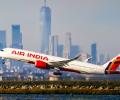
Tata Sons Chairman N Chandrasekaran addressed Air India employees, acknowledging the airline's challenging phase while reaffirming the Tata Group's commitment to its long-term transformation, focusing on service quality, safety, and operational improvements.

Despite significant price differences, Indian farmers are increasingly adopting non-subsidised speciality fertilisers, which are seen as a potential solution to the rising fertiliser subsidy burden exacerbated by global supply shocks.

Civil Aviation Minister Ram Mohan Naidu said the reduction in airport charges is aimed at containing airfare increases and supporting both airlines and passengers.

India's sugar consumption is projected to fall by nearly 400,000 tonnes in the 2025-26 season, primarily due to the ongoing liquefied petroleum gas (LPG) shortage exacerbated by the West Asia conflict and unseasonably cool weather.

A poor monsoon could drag overall economic growth and compound the impact of the West Asia conflict on the Indian economy.

'So far our production is not affected. But every day the situation prolongs, it does bring risks in terms of shipments getting delayed.'
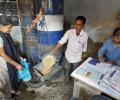
"The world might face a food crisis if the war continued till the end of April, as it could have a dramatic impact on planting in Europe and North America," said Matt Simpson, CEO of Brazil Potash.
The government has suspended its directive requiring airlines to offer at least 60% of seats on flights without additional charges, following industry concerns about the impact on fares and pricing structures.

Suzuki Motorcycle India Ltd (SMIPL) has revised its domestic two-wheeler sales growth estimate for FY27 downwards from 7-8 per cent, citing rising commodity costs due to the ongoing West Asia conflict and its impact on consumer affordability.

'It would be similar to what happened during COVID-19.' 'They are not just losing income, but being pushed into distress.'

Events from mid-2025 to early 2026 exposed deeper systemic concerns for India's aviation safety architecture.

'During the hot season (April to June), above-normal minimum temperatures are likely over most parts of the country, except in some regions of Maharashtra and Telangana, where minimum temperatures are expected to be normal to below normal,' IMD said.

Unseasonal rainfall could damage standing wheat crops, especially late-sown fields nearing maturity and grain-filling stages.

Pilots and aircraft maintenance engineers are responsible for planning and conducting flights, and these decisions must rely on technical judgment rather than external influence.
 © 2026 Rediff.com - Advertise with us - Disclaimer - Privacy Policy - Sitemap - Feedback - About us - Terms of use - Grievances